




In New York City, the real estate deals worth fighting for don’t make the multiple listing services. The best opportunities in Brooklyn, Queens, the Bronx, and Staten Island are traded behind the scenes between wholesalers, attorneys, long-standing neighborhood contacts, and sellers who value certainty above price.
And certainty doesn’t come from a 30-day bank approval.
Off-market sellers expect a buyer who can move like cash, close in a week, and handle the wrinkles that come with distressed, inherited, or long-neglected properties.
If you’re competing for off-market listings in the Five Boroughs with a conventional pre-approval letter, you’re already behind.
That’s where experienced hard money lenders in New York change the equation. With the right broker and lender, you can present yourself like a true cash buyer: issuing real proof of funds, skipping appraisal delays, clearing silent liens upfront, and moving at the speed off-market deals demand.
The off-market reality in New York City
In most parts of the country, investors spend their time refreshing the MLS. In the Five Boroughs, that’s where you go to see the deals everyone else already passed on. The real spread – properties with margin, workable timelines, and motivated sellers – moves off-market.
Wholesalers control many of the strongest assignments in Brooklyn and Queens. Attorneys handle quiet estate sales in neighborhoods where families prefer a fast, discreet transfer. Long-time owners with tax issues or deferred maintenance want a buyer who solves their problem quickly, not one who needs a month and a half for underwriting.
In this environment, the buyer who can present a real proof of funds, close in days, and navigate NYC’s quirks wins the sale before offering a price. Access is earned by whoever can execute fastest. That’s why so many local investors turn to hard money lenders in New York, built specifically for the speed and complexity of off-market transactions.

Proof of Funds: How to compete like a cash buyer
In the Five Boroughs, every strong off-market deal starts with one question: “Do you have Proof of Funds?” Most direct-to-seller leads won’t take you seriously without one.
When a reputable hard money lender in New York issues a POF letter, it carries the same practical weight as a bank statement because wholesalers know what it represents.
It signals that the lender has reviewed the borrower and the strategy, that they can move on a seven-day closing, and that the terms won’t fall apart mid-process. Wholesalers in Brooklyn and Queens have long memories. They know which lenders actually fund quickly.
This is how a private money broker becomes a cash buyer surrogate. You show up with institutional credibility behind you, not just your own balance sheet. In a city where cash buyers dominate, matching their speed and certainty is the only way to compete.
Why 30-day bank approvals lose deals
Banks do tend to offer better interest rates than hard money lenders, but in New York City, that advantage disappears the moment speed becomes part of the negotiation. And, in off-market deals, it almost always does.
A bank’s 30–45 day approval process isn’t built for sellers trying to resolve an estate, avoid foreclosure, or liquidate quickly. Scheduling a traditional appraisal can take 10–14 days before the report even arrives.
Most banks also require multiple layers of internal review: especially on mixed-condition housing stock with open permits, tenants, or deferred maintenance. And title surprises like water liens, ECB violations, and open permits often surface after weeks of processing, forcing expensive extensions or killing the deal altogether.
Then there’s seller psychology. Off-market sellers are all about certainty. A slightly lower offer that closes in 7–10 days will always beat a higher offer tied to a 30-day “subject to appraisal and underwriting” clause. Hard money loans in New York work well here because they condense valuation, underwriting, and legal coordination into days instead of weeks.
The advantage of desktop appraisals
One important area banks fall short is the appraisal timeline. In the Five Boroughs, waiting 10–14 days for a traditional appraisal is enough time for a wholesaler to reassign the contract to someone who can move faster.
That’s why many experienced hard money lenders in New York rely on desktop appraisals or internal valuation models. Instead of scheduling an appraiser across Brooklyn or Queens, they use recent closed sales pulled immediately, broker price opinions, internal underwriting data from thousands of past deals, and neighborhood-level insight that banks typically lack. This gives you a working valuation in hours instead of weeks.
This speed is transformative if you’re investing in off-market listings. You can submit your offer with confidence, lock down assignments before competitors even schedule their appraisal, and move from contract to closing without the dead time that kills deals.
Desktop valuations work best on 1–4 family properties with clear sales history: aka the bread and butter of Brooklyn, Queens, and the Bronx. Even in trickier cases, experienced private lenders can often produce a workable internal number long before a traditional report would arrive.
Finding problems before they kill your closing
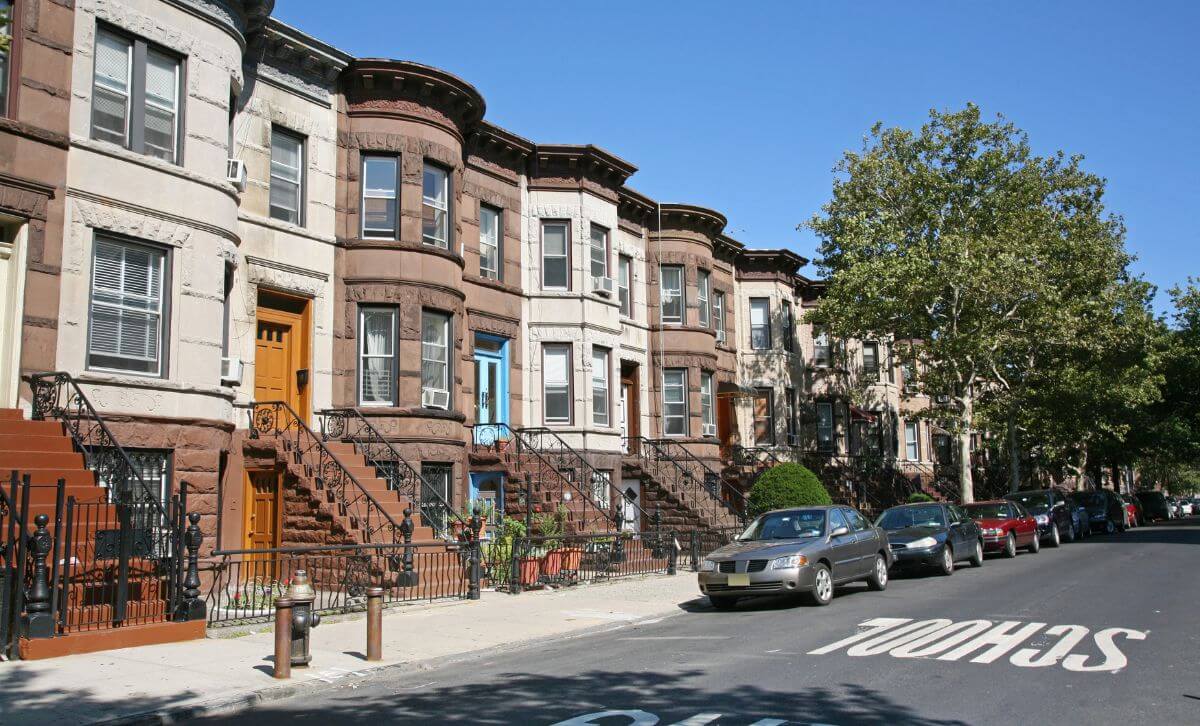
In New York City, the fastest way to blow up a seven-day closing is to discover a lien you didn’t know existed. And in the Five Boroughs, surprises are common. Properties change hands across generations. Permits stay open for years. Violations linger unnoticed until the moment you try to close.
The most experienced investors understand that title issues can be dealt with, but finding out too late is a much bigger problem. A strong hard money broker can run quick checks through their network before a deal even enters full underwriting.
ECB and DOB violations are common on older Brooklyn and Queens housing stock, especially where basements or conversions happened without permits. Open or expired permits are a major issue in brownstones and multifamily properties. Water and sewer arrears, property tax delinquencies, and mechanic’s liens from unpaid contractors can all surface unexpectedly.
But, with the right attorney relationships and title partners, a good broker can get early visibility within 24-48 hours.
That early intelligence lets you negotiate from strength, avoid deals that can’t close fast, and prevent last-minute renegotiations. Hard money lenders in New York support speed with the infrastructure to remove friction before it becomes fatal.
The 7-day closing framework
Closing in seven days doesn’t happen by magic. When you work with hard money lenders in New York who already understand the local market, the steps fall into place quickly and predictably.
Day 1: Deal intake and Proof of Funds. You send the contract or assignment terms. The lender verifies the basics, issues an updated POF letter, and your credibility is established immediately with the seller or wholesaler.
Days 1–2: Desktop valuation and initial underwriting. Internal comps and prior deal data produce a working value the same day. Underwriters confirm the strategy makes sense, the numbers are stable, and the exit is realistic.
Days 2–3: Preliminary title and lien check. A lender with the right title and legal partners can surface ECB violations, water arrears, open permits, or tax issues long before a traditional report arrives. Early visibility keeps the closing on track.
Days 3–5: Final terms and legal coordination. Once value and title direction are clear, the lender locks the terms. Attorneys connect, conditions are met, and any minor issues are handled without slowing the timeline.
Days 5–7: Closing. Loan docs go out, funds are scheduled, and the assignment or sale closes.
To illustrate how this plays out in practice: an investor secures a Brooklyn assignment from a wholesaler on a Monday morning. By Tuesday afternoon, the desktop valuation confirms the numbers. A preliminary title check Wednesday morning surfaces an open permit from a 2009 renovation. The lender’s legal team flags it by end of day, the seller’s attorney files for expedited resolution, and closing happens Friday. Meanwhile, the bank-financed competing buyer never made it past scheduling their appraisal.
When hard money makes sense, and when it doesn’t
Hard money isn’t the cheapest capital on the table, but it’s the fastest and most flexible. The best investors don’t use it for every purchase. They reserve it for the purchases where speed creates value.
Hard money makes sense in the Five Boroughs when you’re buying off-market listings, when you’re competing with cash buyers and need to match their certainty without tying up your own liquidity, when the property needs heavy rehab and banks are hesitating on deferred maintenance or open permits.
But hard money doesn’t add value in every situation. For fully stabilized properties where the seller is in no rush and the title is clean, bank financing is likely the cheaper long-term solution.
For long-term holds with simple execution (for example where your plan is to refinance slowly into a DSCR loan and the deal isn’t competitive) you may not need the speed premium.
And for deals where the property condition genuinely doesn’t qualify (structural issues that make any lender pause, extreme title complexity with no clear resolution path, or purchase prices so low that any financing cost eliminates the margin), stepping back entirely may be the right call.
Hard money is a tactical advantage for the moments when timing determines the winner, not a replacement for conventional financing across the board.

In NYC, speed is leverage
Across the Five Boroughs, investors don’t win off-market deals by offering the highest number but by offering the fastest, cleanest, most certain path to closing. Every advantage covered in this post (proof of funds, desktop valuations, early lien intelligence, and a true seven-day workflow) exists for one reason: off-market sellers value execution above everything else.
When you can behave like a cash buyer without tying up your own liquidity, you change how brokers, wholesalers, and attorneys treat you. You move to the top of their list, see better deals earlier, and stop losing opportunities to buyers who can move faster.
Hard money lenders in New York provide the speed and certainty that off-market investing demands. If you’re evaluating a deal in Manhattan, Brooklyn, Queens, the Bronx, or Staten Island and want a lender who understands the real risks behind the numbers – and how to close quickly when the deal is worth it – Express Capital Financing is built for exactly this market.